Tracking and exact interfaces
The exact-reference bridge reproduces 1,096 teacher decisions across four full trials. Keep the tested motor interface, clocks, data bindings and scoring.
Execution progress · 20 September 2026
Toward a humanoid navigation interface that connects where to go, how the body can pass, and what the robot can observe.
Reach a destination through clutter. Choose a route, adjust the torso and arms, place the feet, and stop where requested. Preserve that intent when commands, geometry or observations change.
Ongoing, unpublished KimoNav research. Current simulation now includes an initial known-map motion selector and conditional beam traversal on one inspected development source. Reliable clutter traversal, perception robustness and hardware navigation remain unestablished.
The downstream problem
Our decision
Keep the goal. Change the order of work. Establish a useful scene-aware planner with a retained tracker. Treat goal-only motor distillation as a bounded comparison, and choose it only if it improves physical task completion or runtime cost.
Latest / Rejection is not the capability boundary
Twelve new fixed executions: local duck and IK lowered each complete 5/6 requests. Both pass at −10 and −30 mm; each passes 1/2 at −50 mm. Frozen geometry shadow decisions cover 2/6 requests and reject three with a measured success. The finite ledger rejects all six. Same ancestry/corridor; no new public admission rule is claimed.
| Fixed reference | Beam −10 mm | Beam −30 mm | Beam −50 mm |
|---|---|---|---|
| Local duck · 6 new | 2/2 | 2/2 | 1/2 |
| IK lowered · 6 new | 2/2 | 2/2 | 1/2 |
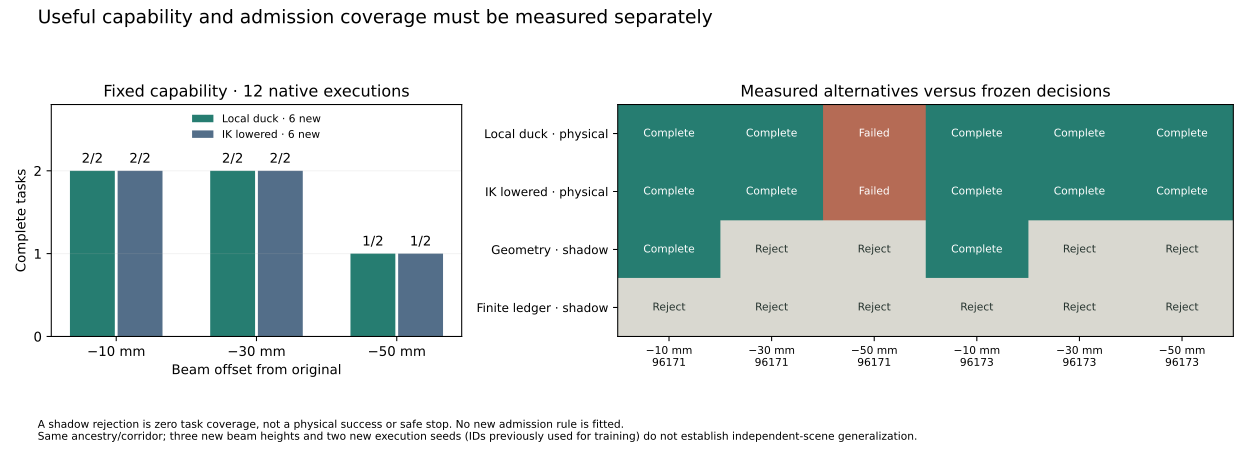
| Rule | Task coverage | Admitted | Rejected with measured success |
|---|---|---|---|
| Reference geometry | 2/6 | 2/6 | 3/4 |
| Finite-context ledger | 0/6 | 0/6 | 5/6 |
Execution seeds are new to this clearance series; the same integers appeared earlier as optimizer seeds, with different physical seeds. Seed-role audit → The public profile remains unchanged; these fixed probes do not automatically admit new requests.
Earlier / Public requests reach the stronger baseline
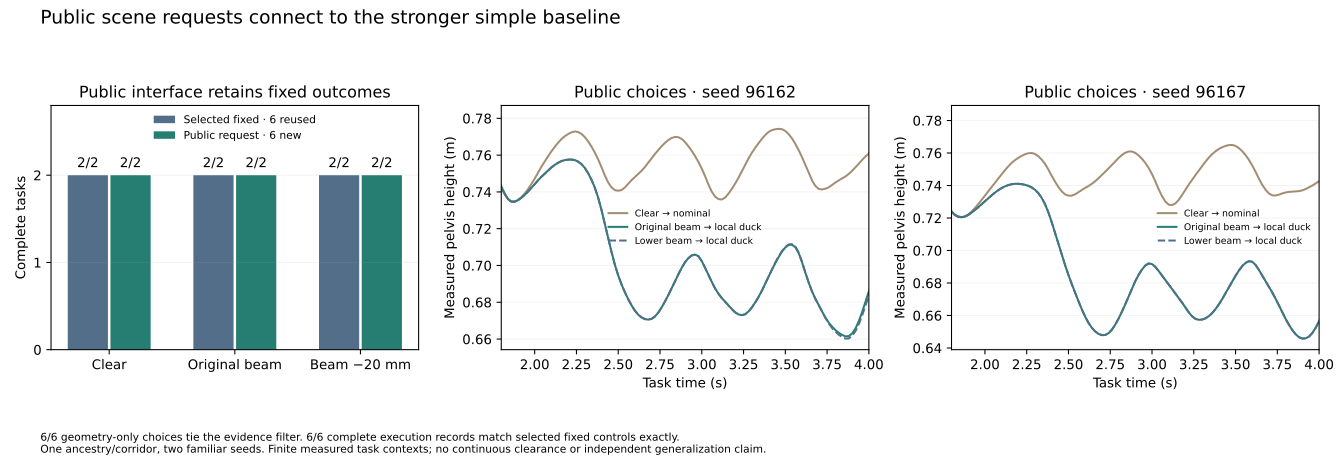
Six new public requests complete all six tasks: nominal in clear space, local duck at both beam heights. The selected fixed controls also pass 6/6, with exactly matching execution records. Geometry-only and evidence-filtered choices tie. One destination, three known-map contexts, one ancestry/corridor and two familiar seeds.
| Execution | Clear → nominal | Original beam → local duck | Beam −20 mm → local duck |
|---|---|---|---|
| Public request · 6 new | 2/2 | 2/2 | 2/2 |
| Selected fixed · 6 reused | 2/2 | 2/2 | 2/2 |
Earlier / Simpler references retain the task successes
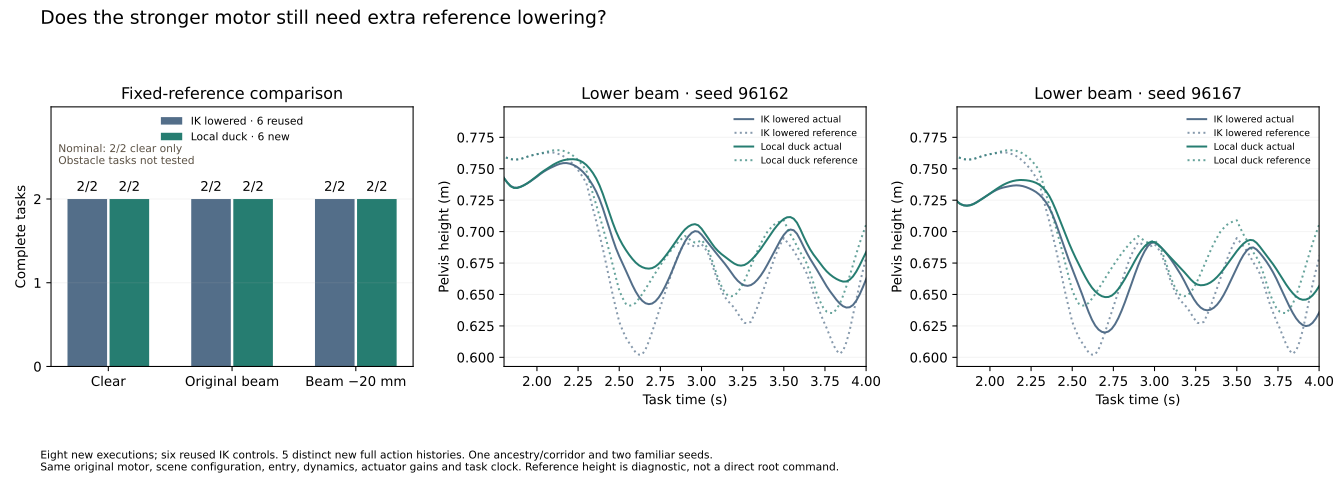
With original SONIC weights and the same scene configuration, the existing local duck completes 6/6 tasks, retaining all six IK-lowered successes. Nominal motion completes 2/2 clear-space tasks; its obstacle cases were not tested. Eight new executions and six reused controls, on one ancestry/corridor and two familiar seeds.
| Fixed reference | Clear | Original beam | Beam −20 mm |
|---|---|---|---|
| IK lowered · 6 reused | 2/2 | 2/2 | 2/2 |
| Local duck · 6 new | 2/2 | 2/2 | 2/2 |
| Nominal · 2 new | 2/2 | Not tested | Not tested |
Earlier / Public choice with the scene motor
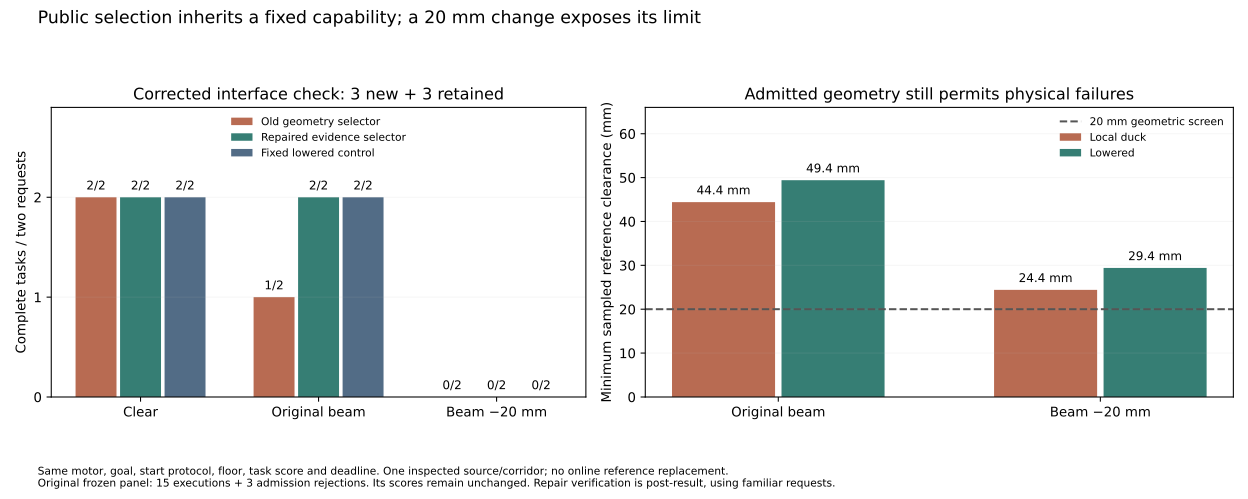
The corrected public selector completes 2/2 clear and 2/2 original-beam requests, but 0/2 with a 20 mm lower beam, matching the strong fixed control. The interface check uses three new and three retained executions; original admission failures remain recorded.
| Controller | Clear | Original beam | Beam −20 mm |
|---|---|---|---|
| Old geometry selector | 2/2 | 1/2 | 0/2 |
| Corrected evidence selector | 2/2 | 2/2 | 0/2 |
| Fixed lowered control | 2/2 | 2/2 | 0/2 |
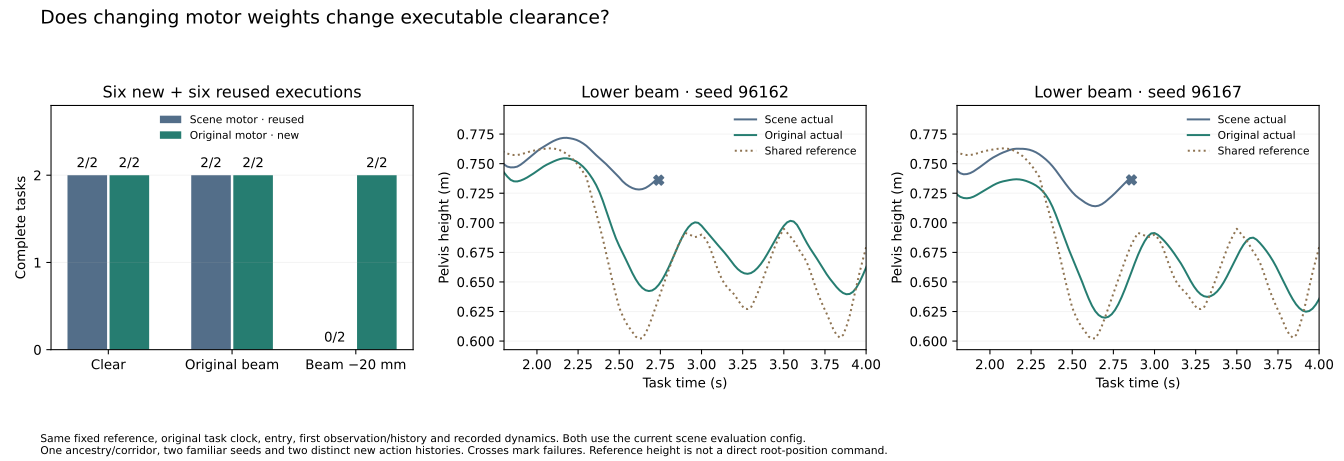
Earlier / Motor capability changes the outcome
Original SONIC weights complete 6/6 fixed-reference tasks under the same scene evaluation configuration, versus 4/6 for the previous motor. Both lower-beam failures become successes, with no task regressions. Six new executions and six reused controls; one ancestry/corridor and two familiar seeds.
| Motor weights | Clear | Original beam | Beam −20 mm |
|---|---|---|---|
| Previous scene motor · 6 reused | 2/2 | 2/2 | 0/2 |
| Original motor · 6 new | 2/2 | 2/2 | 2/2 |
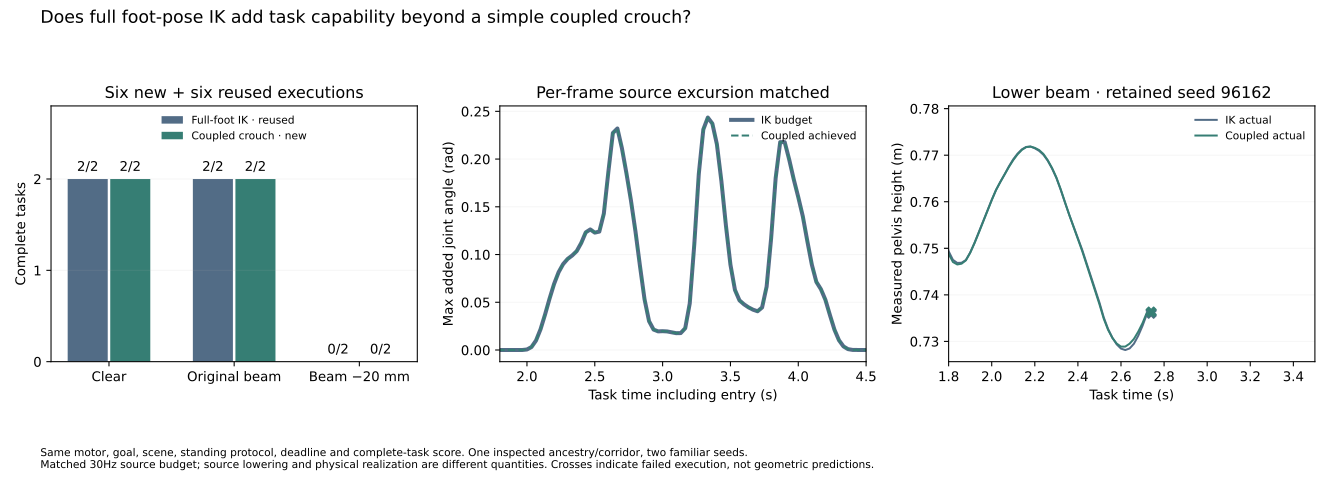
Earlier / Reference construction at the previous motor
Six new coupled-crouch executions match six reused full-foot IK controls: both complete 2/2 clear and 2/2 original-beam tasks, and both complete 0/2 at a 20 mm lower beam. The public selector was unchanged in that study; these familiar conditions do not establish equivalence or generalization.
| Fixed reference | Clear | Original beam | Beam −20 mm |
|---|---|---|---|
| Full-foot IK · 6 reused controls | 2/2 | 2/2 | 0/2 |
| Coupled crouch · 6 new trials | 2/2 | 2/2 | 0/2 |
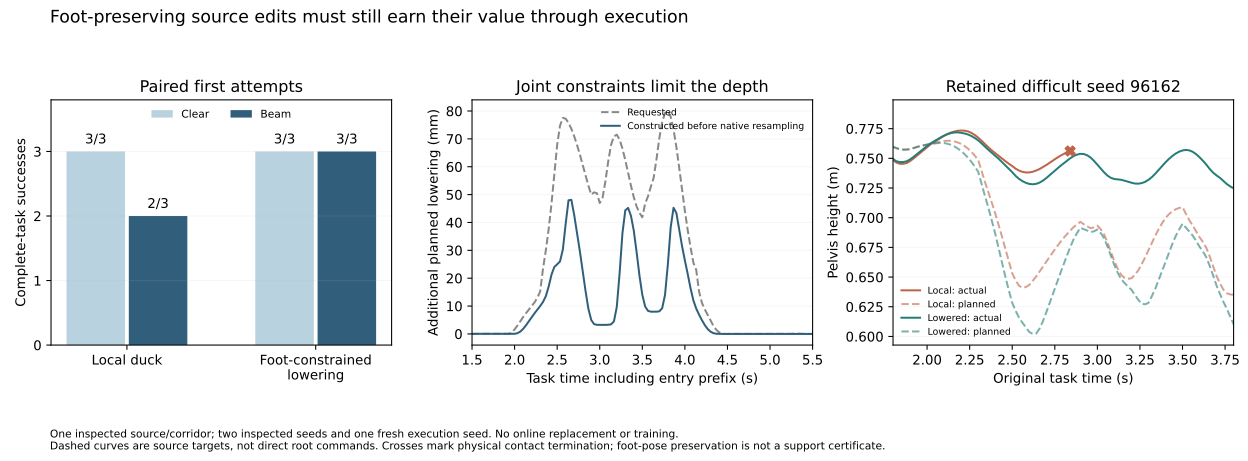
Earlier / Fixed lowering qualification
Foot-pose constrained lowering completes 3/3 beam and 3/3 clear tasks; matched local duck is 2/3 beam. This qualifies a fixed development candidate, not an online replanner or a new public-selector result.
| Fixed reference | Clear: complete task | Beam: complete task |
|---|---|---|
| Local duck | 3/3 | 2/3 |
| Foot-constrained lowering | 3/3 | 3/3 |
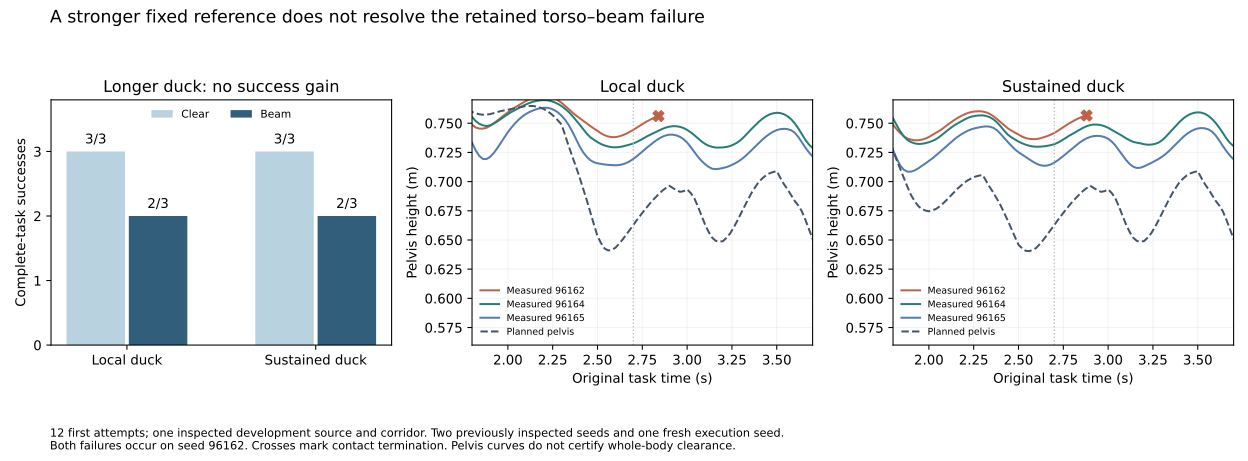
Earlier / Fixed-duration comparison
The map now changes the reference that reaches the robot. A longer fixed duck, however, retains the same torso–beam failure. That result motivated the fixed lowering comparison above.
| Fixed continuation | Clear: complete task | Beam: complete task |
|---|---|---|
| Local duck | 3/3 | 2/3 |
| Sustained duck | 3/3 | 2/3 |
Earlier initial map selection: 2/2 clear and 1/2 beam, equal to fixed duck on the beam. No online replacement yet. Latest audits: six exact initial-state pairs, four exact historical controls, 4,537 exactly replayed outputs and 29 passing checks. These are development findings, not independent scene generalization.
01 / Historical student evidence
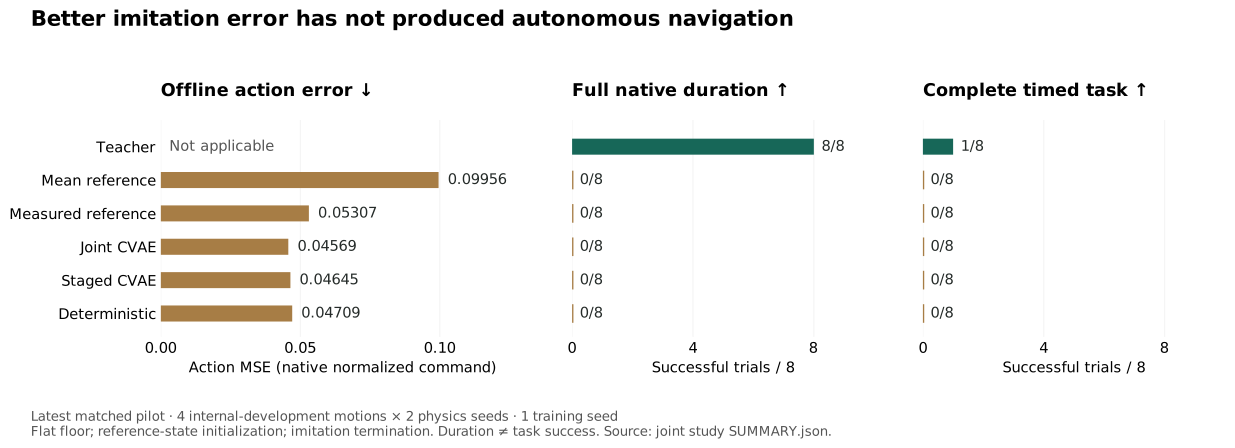
The September 15 matched student study improves some imitation metrics, but every public student arm still ends early. Tracking a supplied motion, completing a timed task, and avoiding whole-body collisions are different capabilities.
| Controller | Full duration | Timed task | Action MSE ↓ |
|---|---|---|---|
| Tracking teacher | 8/8 | 1/8 | — |
| Mean reference | 0/8 | 0/8 | 0.09956 |
| Measured reference | 0/8 | 0/8 | 0.05307 |
| Joint CVAE | 0/8 | 0/8 | 0.04569 |
| Staged CVAE | 0/8 | 0/8 | 0.04645 |
| Staged deterministic | 0/8 | 0/8 | 0.04709 |
The exact-reference bridge reproduces 1,096 teacher decisions across four full trials. Keep the tested motor interface, clocks, data bindings and scoring.
Earlier matched evaluation: original SONIC completes 20/20 reserved clips; the repaired teacher completes 16/20. Improved precision does not imply uniformly better retention.
Teacher comparison →Initial map selection now changes executed references. Online reference replacement, broader scene completion, perception robustness and hardware performance remain open.
02 / One task, connected components
The intended interface carries a destination, optional route and timing, and timestamped observations. Today it accepts one bound destination in three known-map task contexts and selects an initial motion. The tracker uses measured feedback; online continuation planning and sensing extensions remain future work.
Implemented initial selector with original motor weights and a new finite qualification profile. Six new familiar requests complete 6/6 tasks. Geometry-only and evidence-filtered choices tie; no online replanning.
One bound destination, three known-map task contexts and a measured standing body. No task-provided answer motion ID.
Motor-specific prior evidence plus geometry and endpoint checks choose nominal when clear and local duck at both beam heights.
Selected q/dq/orientation → original encoder / FSQ → decoder with actual proprioception and action history. Common scene configuration and actuator gains are bound.
2/2 clear, 2/2 original beam, 2/2 beam −20 mm. All six execution records match selected fixed controls exactly; admission-rule superiority remains unproved.
↶ Measured state closes the motor loop. The initial plan is not replaced during execution; continuation from a deviated body remains unqualified.
Bound public task/map, measured initial body, current orientation and actual motor history; fixed bank and prior ledger tied to this motor, configuration and standing profile.
Exact geometry/localization are declared development assumptions. Future realized outcomes and matched-control records do not select the candidate. Changed unmeasured requests are rejected, without a safe-stop claim.
“Reach this region and wait.” Optional heading, time window, route and allowed contacts. Sensors provide joint state, IMU and later RGB/depth/LiDAR, each with its frame, timestamp and availability.
Physical whole-body motion plus task status: progress, completion, a replanning request or no supported continuation. Joint commands are the motor output; motion references are the planner output.
Navigation tokens, predicted motion and SONIC code64 have different meanings. The current R640 motor interface does not automatically accept world goals, scene geometry or new contacts. Proposed versioned input/output contract →
03 / Why the body belongs in navigation
A narrow opening can require rotation. An overhang can require lowering the body. When both occur, the movements must be coordinated. The important experiment changes the geometry while keeping the destination fixed.
Geometric illustration only. Dimensions describe a simplified envelope, not measured G1 geometry. Passing these width/height tests does not establish balance, foot placement, dynamic feasibility or collision-free robot execution.
Coordinate torso, arms, pelvis, legs and feet to change swept volume, using supported motions and permitted floor contact.
Hand-supported climbing, opening doors, pushing objects and carrying loads require contact-aware dynamics and motor qualification.
Keep support, obstacles, overhead space and unknown regions explicit. Sensor adapters must retain these meanings and be tested under noise and delay.
04 / Experiments that change a decision
Each stage has an observable exit condition. A planner–tracker is the main proposed route; direct student compression remains a comparison. Registered execution studies now qualify parts of this route; the latest fixed probes show that current rules reject some executable requests while a lower-beam failure remains. The next step must compare simple calibration with execution-aware prediction. See the complete progress record above.
Both fixed references complete 5/6 distinct-clearance requests. Geometry shadow decisions cover 2/6 and reject three requests with a measured success.
Compare a calibrated reference margin with body envelopes built from prior execution. Add state-conditioned uncertainty only when the simpler alternatives leave a demonstrated gap.
Replace the hardcoded source-name assumption with explicit bank metadata. Candidate source 00265 was previously inspected and needs current-motor standing and task qualification.
After qualification, freeze height/width or obstacle-placement requests and supported entry variations. Include fixed controls and an executable detour when available.
Connect timestamped depth/LiDAR and later RGB. Test partial views, localization error, latency and dropout before language and new contacts.
05 / The comparison set has changed
Whole-body traversal, scene-conditioned references and planner–tracker hierarchies already have close precedents. Our proposed contribution needs a specific advantage under matched task and observation conditions.
TANGO · 8 SEPTEMBER 2026
The closest RGB-and-language reference-chunk comparison. Study its task and motor interfaces before claiming a new general navigation system.
PASSAGE · 16 SEPTEMBER 2026
A direct comparator for destination-conditioned planning and body geometry. Our modular architecture alone is not the contribution.
CAT / HUMANOIDPF · 2026
Compare explicit per-body geometry with simpler planar control at matched sensing and execution capability.
MTC · OUR RELATED DATA WORK
Connect to existing geometry–motion data. Keep captured motion, retargeted reference and physical execution distinct.
The full review also covers BFM, Scaling BFM, BFM-Zero, SONIC, SceneBot, Perceptive BFM, DWMP, ADAPT and motion-first data precedents. It distinguishes newly inspected primary text from earlier literature notes. External results have not been reproduced here.
Read the source and decision matrix →06 / Research record
The September 10 page preserves the recorded terminal-repair demos, detailed timing analysis and original evidence assets. It is a historical snapshot; it does not establish the proposed traversal system.
Terminal-repair research archive →Review scope: local result records and selected implementation, with targeted primary-paper reading. An inventory is not a full replication of every archived experiment. Historical protocols, teacher weights and data splits are preserved.